30.12.2025
Symphony of Ice and Sun
Top 5 Guides to Anna Kurbatova's Literary World
Anna Igorevna Kurbatova, an Associate Professor at RUDN University, holds a Candidate of Biological Sciences degree in Ecology and is a bronze medalist of the XXII International Salon of Inventions and New Technologies "New Time." As the year concludes, she presents a new top book list for you, featuring works that reveal climate's influence on history, the future of the global economy, and offer a soul-refreshing literary reset.
1. Brian Fagan, "The Little Ice Age"
I recommend this book to readers for the following reasons: Fagan provides a detailed and engaging narrative about the Little Ice Age period (approximately 14th–19th centuries), demonstrating how climate shaped human history—impacting social, economic, and political processes across various world regions. The author synthesizes data from paleoclimatology, history, archaeology, and social sciences, offering a comprehensive, multifaceted understanding of how climatic shifts affected civilizations. The book features an accessible and captivating style. Despite its scientific foundation, it is written in clear language and enriched with interesting examples and narratives, making it understandable and appealing to a broad audience—from students and researchers to simply curious readers.
2. Peter Zeihan, "The End of the World is Just the Beginning: Mapping the Collapse of Globalization"
The era of stability in the global economy is over. What future awaits us now? Is humanity facing the end of globalization, the disintegration of global economic ties, and the decline of world trade? Peter Zeihan, a specialist in geopolitics and geostrategy and founder of the consulting firm Zeihan on Geopolitics, attempts to answer these questions. By analyzing key global trends in world trade, transportation, the financial system, and demographic shifts, the author paints a new world picture where each country develops in isolation, resolves conflicts independently—all against the backdrop of an aging and shrinking population. Which countries and regions will find themselves in a winning position in the foreseeable future, and which might face poverty and hunger? Which country will thrive thanks to the "Geography of Success"? This book was recommended to me by my colleague, Dr. Daria Alexandrovna Dinets, from the Faculty of Economics at RUDN University. It has now become my desk reference, filled with bookmarks and my notes. None of the subjects I teach now pass without me referencing the author's ideas.
3. M.E. Saltykov-Shchedrin, "The Golovlyov Family"
In a conversation with Vasily Viktorovich Shevtsov, Director of the Department of Technological and Information Resources at the RUDN Directorate for Digitalization, we touched upon Russian classics, and of course, "The Golovlyovs." I have reread it several times, listen to audio recordings, and enjoy watching vintage Moscow Art Theater productions. I advise everyone to read this novel, which with exquisite clarity reveals the nature of hypocrisy and duplicity. A true handbook for psychologists.
4. Jorge Amado, "Gabriela, Clove and Cinnamon"
The novel was published in Brazil in 1958 and had the impact of an exploding bomb. 20,000 copies were sold in two weeks, and 120,000 copies within a year. Reading the book is like undergoing a therapy course for autumn blues. Here you'll find sunshine and a unique rhythm of life, entirely different from ours. So, if you wish to reset, find yourself in Brazil under the bright sun, and learn to appreciate life more—feel free to read this Brazilian classic.
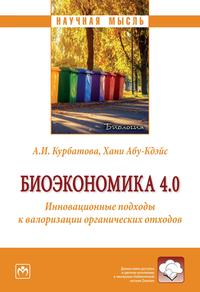 |
5. Another Recommendation. Recently, my monograph co-authored with Jordanian scientist H. Abu-Qdais, "Bioeconomy 4.0: Innovative Approaches to the Valorization of Food Waste," was published by Infra-M. Bioeconomy is a science based on the sustainable development of society. The development of bioeconomy sectors implies enhancing resource and energy efficiency, valorizing organic waste, advancing renewable energy based on biomass, and producing functional foods. The monograph's distinctive feature is its emphasis on the latest achievements in the field of organic waste valorization within the context of Bioeconomy 4.0 principles, based on the authors' scientific research. |
To participate in the TOP 5 BOOKS column, please send your applications to ayibova-ev@rudn.ru — Your Academic Cat