08.07.2026
July 8 — Day of Family, Love and Fidelity
In honor of the Day of Family, Love and Fidelity, we have prepared a comprehensive article covering the history of the holiday, its symbols, the 7 stages of love, and a book selection from the holdings of the RUDN Scientific Library — ranging from Russian literary classics to family pedagogy and psychology
History of the Holiday
The Day of Family, Love and Fidelity is one of the brightest and most touching holidays in Russia. It originated from the remarkable love story of the Murom prince Peter and his wife Fevronia, who lived in the 13th century and were canonized by the Orthodox Church in 1547.
"The Tale of Peter and Fevronia of Murom" appeared after the couple's canonization. The legend was written during the era of Ivan the Terrible by Yermolay Erasmus at the request of Metropolitan Macarius of Moscow. The tale is based on two folk stories — about a fiery serpent and a wise maiden. The work is rightfully considered a monument of Old Russian literature.
"They asked God for death on the same day and prepared a single coffin for both."
How the Events Unfolded?
In the 13th century, Murom was ruled by Yuri Vladimirovich. One of his sons — Peter — suddenly fell ill with leprosy. No treatment could help him. One night, he saw a girl named Fevronia in a dream, who could heal him.
Peter searched for her for a long time and found her in one of the Ryazan villages. Fevronia was the daughter of a beekeeper and a simple peasant woman, but from childhood she knew the healing properties of herbs. She agreed to help but set a condition: Peter must marry her. The prince promised, but after his recovery he broke his word — and the illness returned with renewed force.
Then Peter turned to Fevronia again, and she did not refuse. After the second healing, the prince kept his promise, and Fevronia became his wife, and thus a princess.
The Test of Power
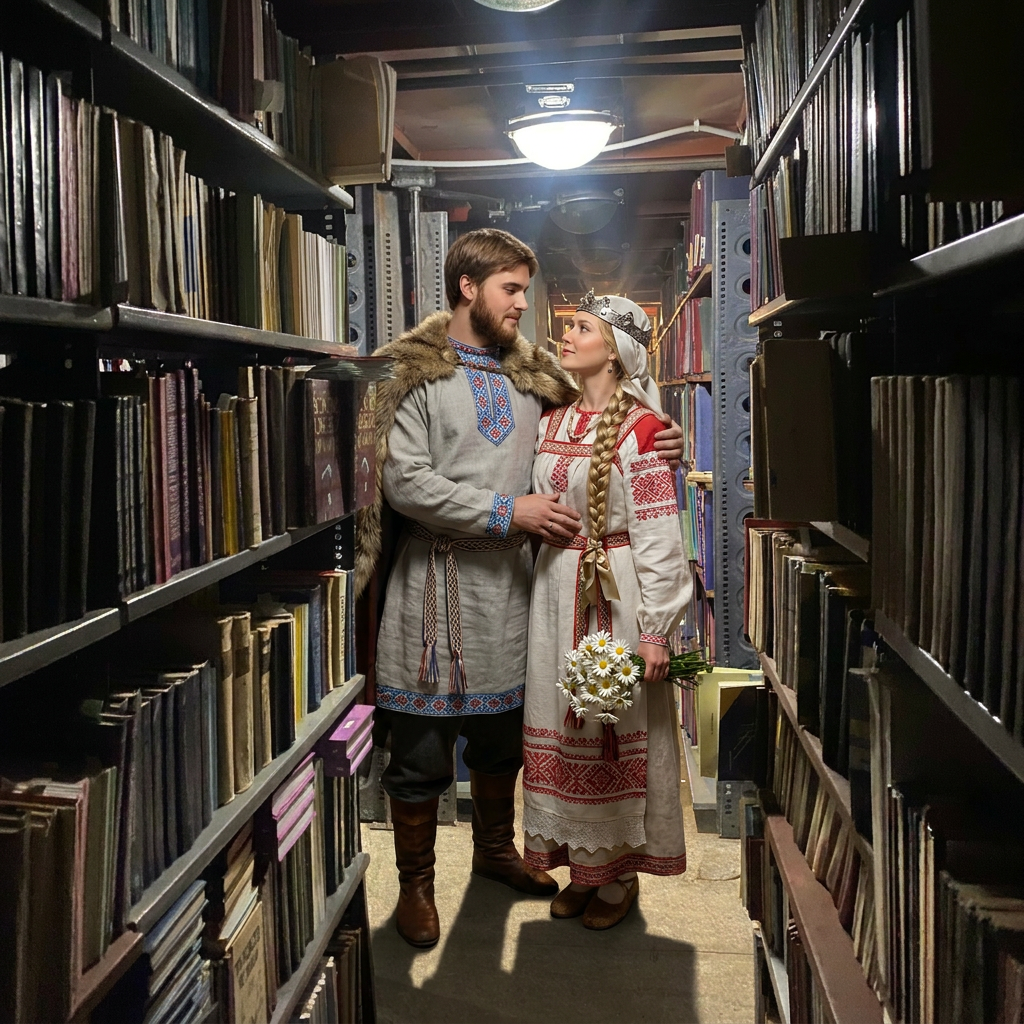
In 1203, Peter began his reign in Murom. The boyars accepted the new prince, but not his wife — a former peasant woman. Peter was given a choice: either power or his wife. Without hesitation, the prince left the city with his beloved wife, renouncing the throne.
However, soon things in Murom went badly — the city, deprived of wise governance, plunged into chaos and lawlessness. The boyars realized their mistake and begged the couple to return. Peter and Fevronia came back and ruled justly for many years.
Eternal Love
At the end of their earthly life, the spouses took monastic vows. All they asked of God was death on the same day. They even prepared a single coffin. Their wish was fulfilled: they passed away on the same day — July 8, 1228.
Since then, this date has become a symbol of marital fidelity, devotion, and true love.
The Symbol of the Holiday — Chamomile
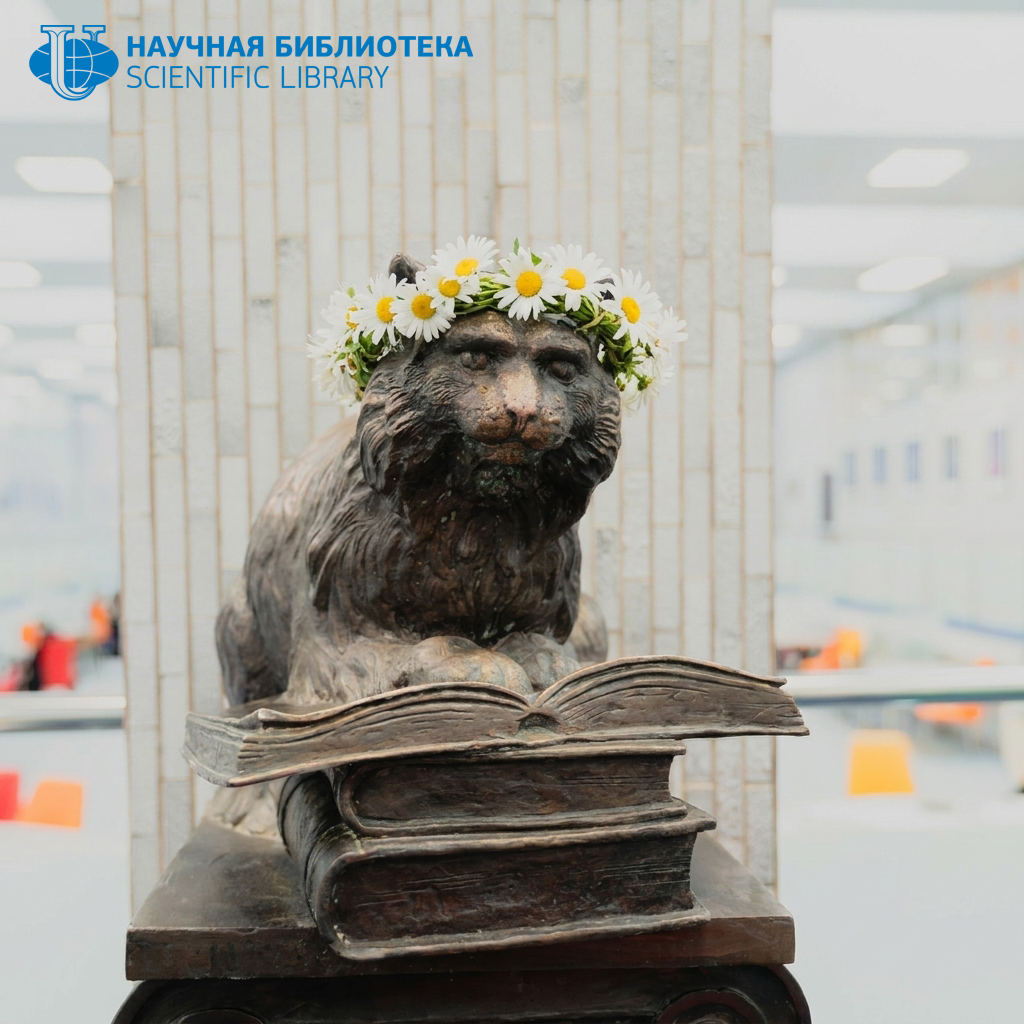
The white chamomile is the main flower of the Day of Family, Love and Fidelity. It symbolizes purity, sincerity, fidelity, and family happiness.
On this day, it is customary to:
-
Give bouquets of chamomiles
-
Weave wreaths
-
Exchange "Fevronki" — postcards with chamomile images as symbols of love and family well-being
Modern History of the Holiday
The modern history of the holiday began in 2008. The initiative for its widespread celebration was supported by public organizations, the Russian Orthodox Church, and the Foundation for Social and Cultural Initiatives.
Today, the Day of Family, Love and Fidelity is celebrated in virtually all regions of Russia. The main celebrations traditionally take place in Murom — the homeland of Saints Peter and Fevronia.
Medal "For Love and Fidelity"
Every year on this day, the medal "For Love and Fidelity" is awarded to couples who have been married for more than 25 years and have become examples of a strong family, mutual respect, and dignified upbringing of children.
About Love and Fidelity: The 7 Stages of Love
To arrive at true, deep love, one must go through a difficult path. Psychologists distinguish 7 stages of love:
| Stage | Description |
| 🌼 Infatuation | It all starts with chemistry — happiness hormones (endorphin and oxytocin), a state of euphoria, and the bouquet-and-candy period. This is the brightest and most emotionally intense stage. |
| 🌼 Satiety | "Brains return to their place." Passion subsides, negative traits of the partner emerge, and everyday problems come to the forefront. Misunderstandings and conflicts arise. |
| 🌼 Disgust | The most difficult period! Egoism and irritation take center stage. It is impossible to skip this stage — it occurs for everyone, just at different times. Many families break up exactly here, but this is often a mistake. |
| 🌼 Humility | Understanding comes: to save the relationship, one must accept the partner as they are and improve oneself — learn to forgive, understand, support, and endure. |
| 🌼 Service | Humility grows into respect — and this is a sign of budding love. There appears a desire to bring joy to your partner without expecting anything in return. |
| 🌼 Friendship | Partners feel good and interested together, like with no one else. Most often, this stage begins when children have grown up and parents have enough time for each other. |
| 🌼 Love | Partners become truly close people. They think alike and understand each other without words. At this stage, it becomes clear: it is better to be happy than to be right. |
Love in the Russian Cultural Tradition
Professor of the Department of Ethics at RUDN University, M.V. Moiseenko, writes about the phenomenon of love in the Russian cultural tradition:
"In Rus', love was always treated chastely, as a sacrament. M.M. Prishvin, a connoisseur of Russian folk life, noted that in Rus' they did not say 'I love' — something shameful, physical, was seen in it. They said 'I pity' (zhaleyu), thereby emphasizing responsibility and care for the beloved person."
These traits — spirituality, chastity, care — are reflected in Russian folk proverbs:
"Counsel and love — on this the world stands"
"Where there is conscience, there is love"
"One thought — one heart"
"Heart sends news to heart"
"They live soul to soul"
"She can't breathe enough of him"
"For the sake of the beloved, one does not spare oneself"
In Russian folk tales, which reflect the moral ideals of the people, happiness is earned through hardship. Heroes go "beyond thrice-nine lands" for their love and undergo trials "by fire, water, and copper pipes".
The life-giving power of love is ready to conquer even death. For goodness akin to love, natural forces, the animal world, and even sometimes Baba Yaga respond with kindness.
Book Selection from the RUDN Library Holdings
Classics of Russian Literature
📘 I.A. Goncharov — "The Precipice" (Obryv)
The protagonist — Boris Pavlovich Raysky, an artist and poet. Despairing of finding a life filled with all-consuming feelings, he moves from St. Petersburg to his cousin's ancestral estate. And it is here, in the bosom of nature, that the dreamer finds what he was looking for: passion, love, bright and powerful emotions.
📘 N.M. Karamzin — "Natalia, the Boyar's Daughter"
A romantic story written by the great Russian historian and writer Nikolai Mikhailovich Karamzin (1766–1826) , tells of the love between Natalia, the daughter of a boyar, and the brave Alexei Lyuboslavsky, whose father was falsely accused of involvement in revolts against the royal family.
📘 A.S. Pushkin — "The Captain's Daughter"
"The Captain's Daughter" is a great novel about love. Pushkin does not teach, but truly shows how love transforms the characters. It is both a biographical novel of the nobleman Pyotr Grinyov, a coming-of-age story, and a family chronicle of the Grinyovs. The fates of the characters illuminate the meaning of the epigraph:
"Take care of your honor from a young age."
Books on Family Pedagogy and Psychology
📘 G. Strelkova — "Lessons of Fairy Tales"
An unusual book for family reading! It resembles an interesting textbook for preschoolers. It contains stories, fairy tales, and assignments — for both parents and children. The book makes you think, understand your feelings and actions, see mistakes, and become better. It teaches kindness — and that is the main thing!
In form, it is a tale about tales, an extraordinary journey into a world where a child gains the right of moral choice. And it is also a book for parents. Its task is to show parents how to work with a child on a literary work.
📘 "From Me to We: The ABCs of Family Life"
A book for joint reading by parents and children. It covers a wide range of issues related to starting a young family:
-
Formation of a young family
-
Strengthening marital relationships
-
Age-related developmental features of children and their upbringing
-
Secrets of housekeeping
These issues are explored by educators, psychologists, sociologists, doctors, and journalists.
📘 H. Stolz — "What Should a Child Be Like?"
The work of a German author — a scholar and pedagogue, published in the GDR — is devoted to moral upbringing in the family and the ethics of family relations. The author examines issues of strengthening the family, increasing its role and responsibility in nurturing a harmonious child personality.
The book will be useful and provide interesting information to:
-
Parents
-
Preschool teachers
-
Schoolteachers and educators
🌼 Happy Holiday!
May coziness, mutual understanding, and warmth always reign in your home. May love and fidelity be the values you cherish and pass on from generation to generation.
Happy Day of Family, Love and Fidelity! 🌼🌼