- Home
- News
- "Suddenly a young poet appeared with a little book of tales and songs and caused a terrible scandal..." (A.S. Pushkin)
11.12.2025
memorable_date
"Suddenly a young poet appeared with a little book of tales and songs and caused a terrible scandal..." (A.S. Pushkin)
December 11 marks the 215th anniversary of the birth of Alfred de Musset (1810-1857)
A poet, prose writer, and playwright counted among the top ten names that brought fame to French literature and the French national theatre.
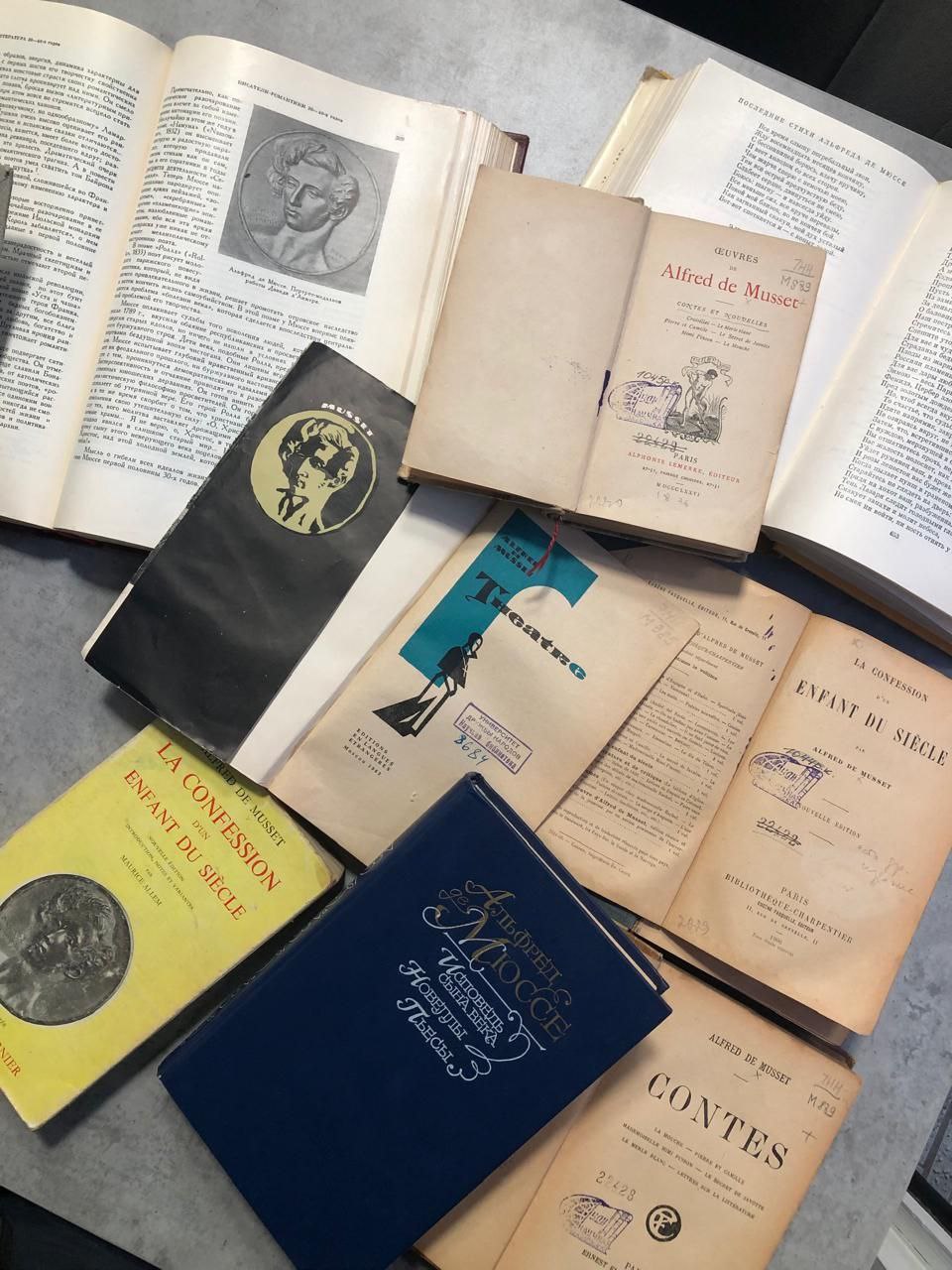
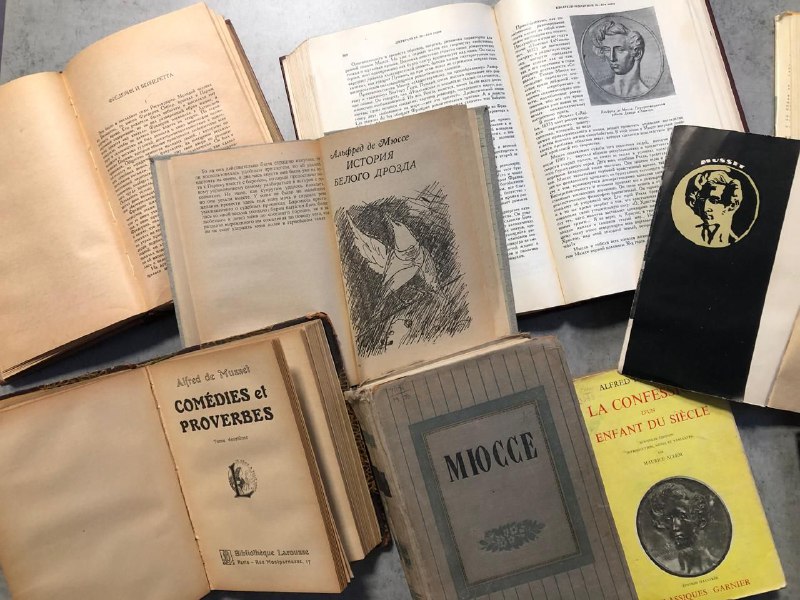
His first masterpiece, "Ballade to the Moon" (Ballade à la lune), from his first little volume "Tales of Spain and Italy" (Contes d'Espagne et d'Italie, 1829), can be found in Russian translation in the RUDN University library among the poet's "Selected Works" (1952). This same collection also includes one of Musset's early tale-poems – "Porcia" (Porcia) – and his "unstageable" dramatic poem "The Cup and the Lips" (La coupe et les lèvres, 1832).
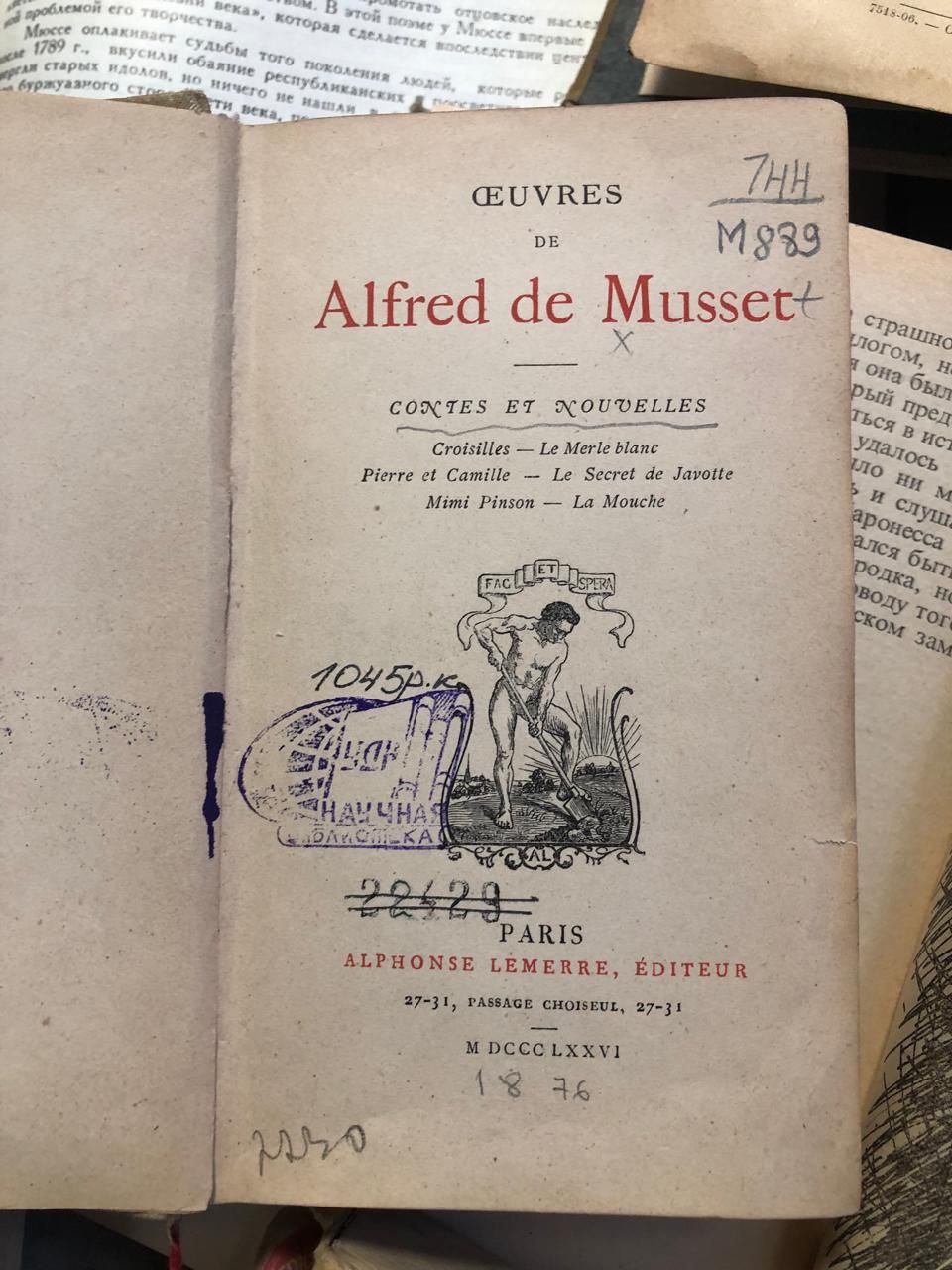
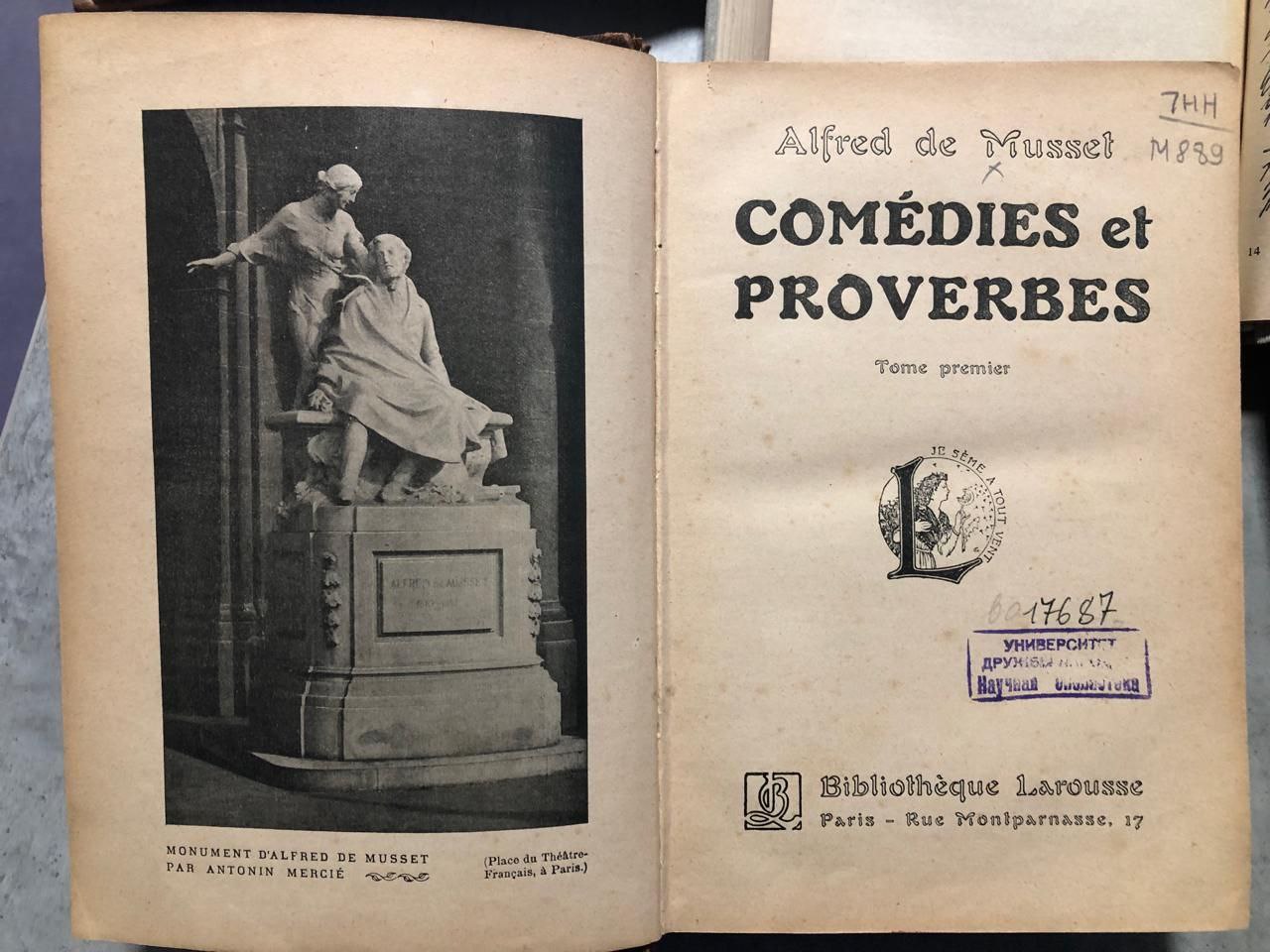
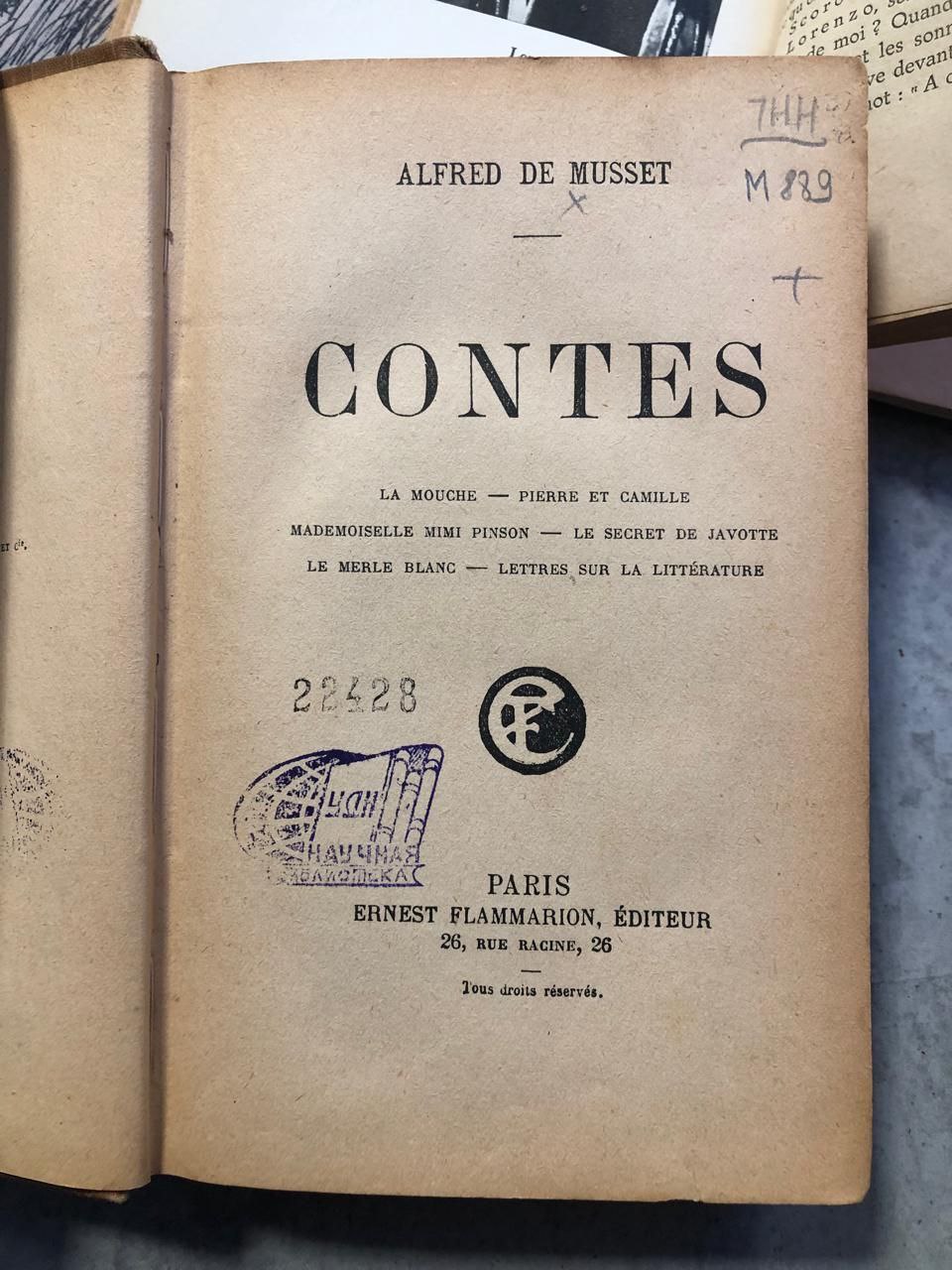
In the original language, these and other tales of his, as well as the plays "The Venetian Night" (La Nuit Vénitienne, 1830), misunderstood by its first audience, and "A Caprice" (Un Caprice, 1837), which caused a sensation 17 years later, are available in anthologies from the Rare Book Museum collection: Oeuvres de Alfred de Musset (1876), Comedies et Proverbes (1910), and Contes (1929).
Theatrical fame came to A. de Musset from Russia. The playwright and actor of the Alexandrinsky Theatre (St. Petersburg), Pyotr Andreyevich Karatygin (1791–1865), adapted his comedy-proverb Un Caprice (1837) into a vaudeville "A Caprice, or A Woman's Wit is Better Than Any Thoughts" ("Каприз, или женский ум лучше всяких дум", 1837) for his wife's benefit performance.
Ten years later, friends of the Karatygins, actors from the Mikhailovsky Theatre, brought a French version of the play Un Caprice to Paris, thereby reviving interest in the once-underappreciated works of A. de Musset.
Musset's love for the theatre became mutual, but he writes less and less:
"My strength is failing, and the pass looms steep and high,
Repose is near, but the fight is not yet done...
Like a hard-ridden horse, my weary spirit, I
Feel, must soon stumble, and be thrown, undone."
(Alfred de Musset, translation adapted)